
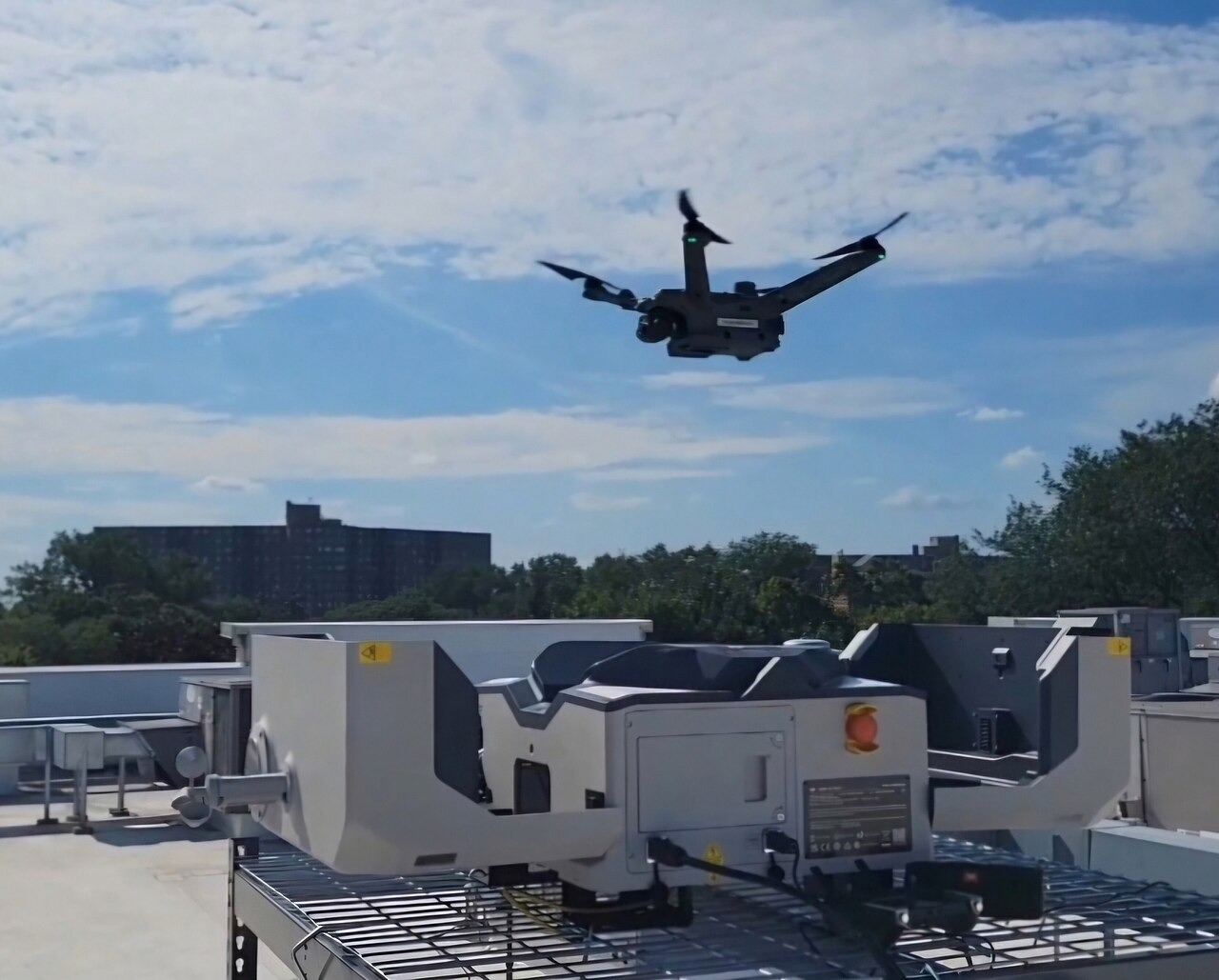
DJI’s Matrice 5TD has a native 1280 by 1024 thermal detector, a new analysis of the company’s specifications finds, giving enterprise buyers a higher-resolution option than the 640 by 512 thermal cameras used on DJI’s Matrice 4T and Skydio’s X10.
The distinction matters because the thermal specification was initially discussed alongside claims that DJI was putting the capability on Mavic-sized aircraft. DroneXL’s review found that the 5TD is instead a dock drone weighing 2,600 grams and measuring 393 by 477 by 230 mm without propellers. It cannot be flown from a remote controller, making it a different operating proposition from a portable inspection or public-safety aircraft. DroneXL’s technical review of the Matrice 5TD specifications
The camera uses an uncooled vanadium oxide microbolometer with an 8 μm pixel pitch and a 30 Hz frame rate. DJI also lists a 2560 by 2048 UHR infrared image mode, but the review distinguishes that super-resolution output from the detector’s native resolution. The aircraft combines the thermal camera with three 50 MP visible-light cameras, a 3,000 m laser rangefinder, LiDAR and millimeter-wave radar.
For commercial operators, the aircraft’s main change is therefore not a drop-in upgrade for an existing handheld or manually piloted fleet. It is part of DJI’s Dock 4 system, aimed at repeatable remote missions such as utility monitoring and emergency response. DJI’s launch materials, as reported by DroneXL, specify automatic battery swapping and a turnaround from landing to takeoff of 45 seconds, while the aircraft can fly for up to 59 minutes under stated test conditions. DroneXL’s Dock 4 launch report
The commercial limits are significant. Dock 4 works only with the Matrice 5TD, requires the O4 Ground Station and weighs 66 kg without batteries. DroneXL also reported that DJI published no production figures or US or European price for the system; a China listing for the Dock 4 kit was 167,999 yuan before any indication of broader availability.
That leaves the native 1280 thermal capability as a documented specification, but not evidence that a compact, manually operated US-market drone with the same sensor is available.